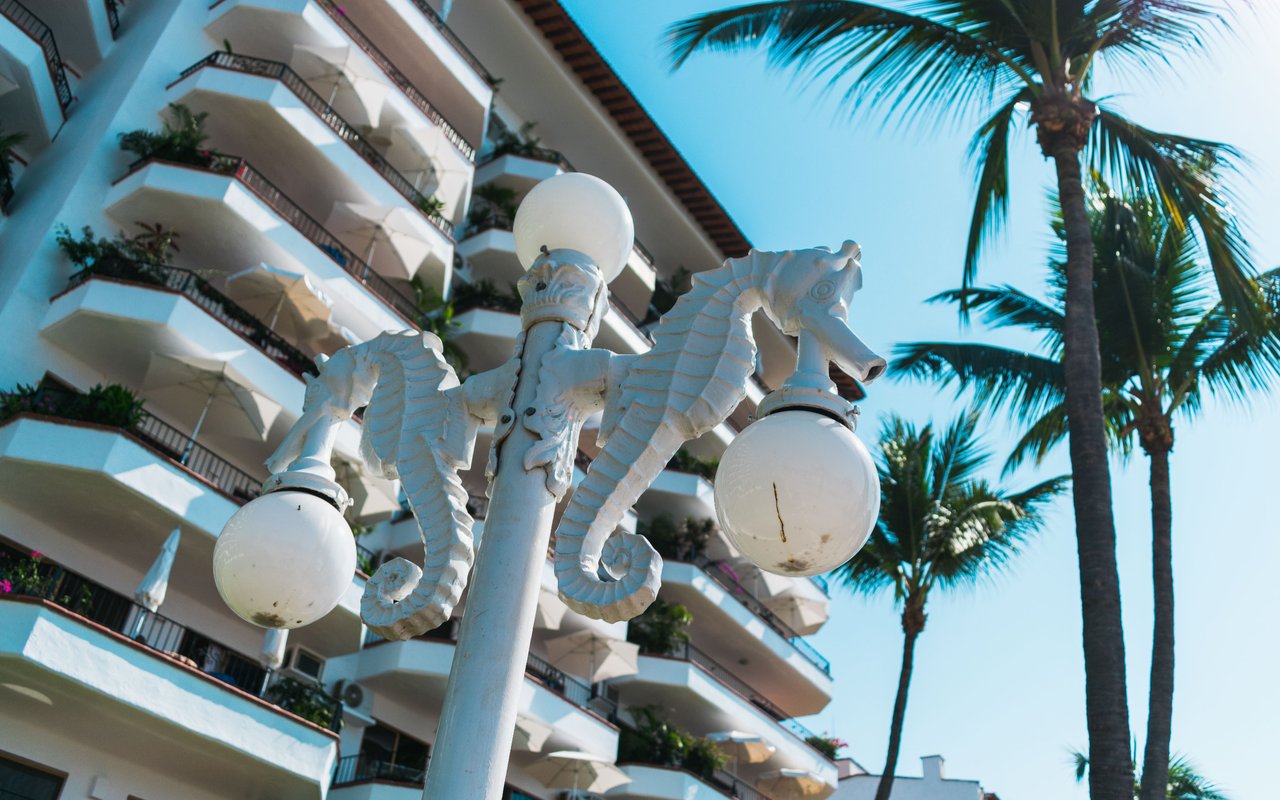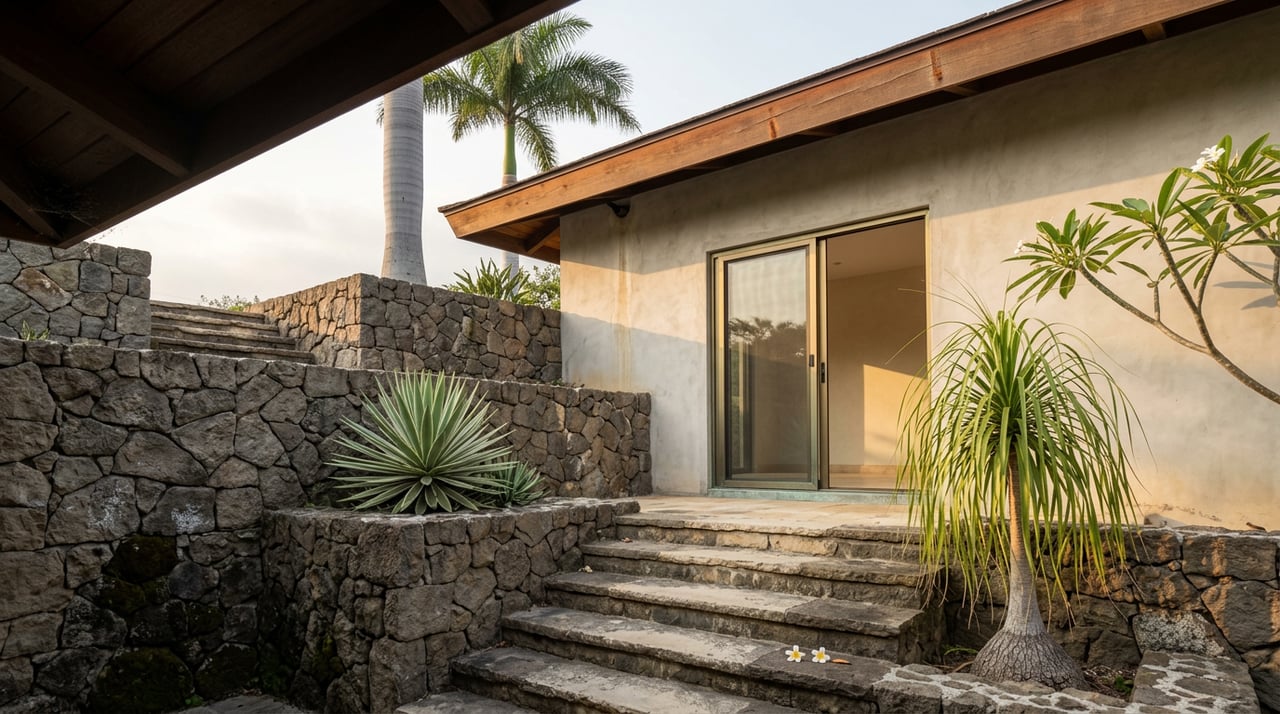
Ninety-nine white steps climb from the highway near Hotel Miramar into the hillside above Playa de los Muertos, feeding into a narrow jungle path that keeps rising toward the Mirador Conchas Chinas lookout. The trail gains close to 918 feet over 2.6 miles, and every one of those feet is the same terrain a buyer's villa sits on somewhere below or above that path. Most people touring homes in this neighborhood register the grade as scenery. It is also, quietly, the single biggest variable in what a Conchas Chinas property costs to insure, permit, and eventually resell.
Buyers who have already toured three or four hillside listings here have heard the sales pitch about privacy and panoramic bay views. Fewer have been walked through why the city treats this particular slope as its own construction category, why a landslide five years ago still shapes underwriting today, and why two homes with similar square footage and similar sunsets can carry very different price tags depending on which side of the ridge they sit on. That last part is the piece worth understanding before an offer goes in.
The building code already tells you this is a different kind of lot
Puerto Vallarta's municipal construction code does not treat Conchas Chinas like the rest of the city. The regulation separates the municipality into the flatter northern zone and the steep-grade areas that sit basically east of downtown and across the entire southern zone, which is where Conchas Chinas falls. On streets with strong grades, the code requires that any new project step down with the hillside rather than stand as a flat vertical wall against it, and it caps building height at 10 meters on those steep-street lots specifically.
That single rule explains a lot of what you are looking at when you tour a hillside villa here. The terraced, stacked, indoor-outdoor layouts that define Conchas Chinas architecture are not purely a design preference. They are the shape the law requires on this grade. When you see a listing photo of a home built in flat, uninterrupted mass on a Conchas Chinas hillside, it is worth asking when that structure went up and whether it was ever reviewed under the current code.
The Dirección de Obras Públicas y Servicios Municipales is the office that reviews and approves these projects, and it also issues separate permits for two things buyers should specifically ask about on any hillside resale: retaining wall construction and earth-movement work. Those are not bundled into a general building permit. They are their own line items, which means they leave their own paper trail. A seller who cannot produce that paper trail for a retaining wall or a graded terrace is not necessarily hiding anything, but it is a document worth requesting before closing rather than after.
Why the insurance quote asks about grade before it asks about the view
Property insurers pricing a Conchas Chinas hillside home look at the slope gradient of the lot, generally somewhere between 15 and 40 percent here, along with soil stability and how close the structure sits to the Pacific, typically within a kilometer. Hurricane season runs June through November, and wind speeds during that window can exceed 120 kilometers per hour, which raises both erosion risk and the load on any retaining wall on the property. Seismic coverage is standard across the board given Mexico's position on the Pacific Ring of Fire, so that part of the premium is not unique to hillside lots. The slope-specific factors are.
What that means in practice is that two villas with nearly identical bay views, one perched on a stable, gently terraced lot and one on a steeper, more exposed grade, can carry meaningfully different insurance costs. A buyer comparing two listings by price per square foot alone is missing the variable that actually explains the gap.
What the 2021 hillside collapse still tells buyers today
In August 2021, part of the hillside above Playa de los Muertos gave way on Calle Santa Bárbara, in the Amapas and Conchas Chinas area, right next to the Hotel Al Mar. The collapse happened during construction and buried heavy machinery in mud and debris, closed the coastal highway, and prompted Protección Civil to order a risk assessment on nearby buildings whose foundations sat at the top of the collapsed slope. No injuries were reported.
A geographer who studies the coastline between Playa de los Muertos, Amapas, and Conchas Chinas later explained why this stretch is prone to this kind of event. The area sits on ancient slide material, fractured rock that looks solid on the surface but was never structurally firm to begin with. As he put it, the ground was never meant to be built on:
"el terreno no es bueno para urbanizar, pues es un antiguo deslizamiento"
That is not a reason to avoid the neighborhood. It is the reason the stepped-construction rule and the separate retaining wall and earth-movement permits exist in the first place. A geotechnical review before a major renovation, or before purchasing a home that predates current code enforcement, is not an overcautious extra step here. It is the specific due diligence this specific slope calls for.
What the price gap by elevation is actually measuring
Conchas Chinas is not one price tier. Entry-level units, generally in condo buildings 20 years or older sitting between roughly 300 and 600 feet above sea level, commonly start around $300,000 to $350,000 depending on size and condition, often needing kitchen, plumbing, or electrical updates while still holding panoramic bay exposure. Homes facing the jungle slope instead of the open bay, along with certain lower oceanfront parcels, tend to list 15 to 25 percent below comparable inventory with unobstructed panoramic views.
It is tempting to read that gap as pure aesthetics, a discount for a less photogenic outlook. Given everything above, a more accurate read is that the discount also reflects engineering exposure. Jungle-facing lots and certain low oceanfront parcels often sit on different slope conditions than the prime mid-hill view lots, which affects both insurance underwriting and the retaining and drainage work a structure needs. The view is part of the price. The ground underneath it is the other part, and it does not show up in a listing photo.
Density tells the same story from a different angle. Conchas Chinas runs around 15 residential units per hectare, compared to roughly 40 per hectare in Puerto Vallarta's urban core, and overall property values here sit about 30 percent above the surrounding municipality. Lower density on a steep grade is not incidental. It is partly a function of how much stepped, engineered lot each home actually requires.
Questions worth asking before you write an offer
- Has this property, or the retaining walls on it, been permitted separately for construction and for any earth-movement work, and can the seller produce those permits
- When was the last geotechnical review, particularly for homes built before recent code enforcement
- Does the insurance quote reflect the specific slope gradient and elevation of this lot, not a general hillside estimate
- Is the property held in an existing fideicomiso with a bank that allows beneficiary substitution, or will a new trust need to be established
That last question affects your timeline more than almost anything else. A foreign buyer typically closes on a Mexican coastal property, which requires a bank trust called a fideicomiso, in 45 to 90 days from signed purchase agreement to final deed execution. Within that window, approval from the Secretaría de Relaciones Exteriores generally takes 5 to 15 days, and bank authorization of the trust adds another 7 to 14 days. Resale properties already sitting in a trust with the same bank move faster, since the transaction becomes a substitution of beneficiary rather than a new trust setup. New construction or anything with pending municipal approvals, which on a steep-grade Conchas Chinas lot can include those retaining wall and earth-movement permits discussed above, extends the timeline further.
Frequently asked questions
Do I need a geotechnical report to buy an existing hillside home, or only for new construction? The municipal code's stepped-construction and permitting requirements are written for new work, but a geotechnical review of an existing structure's foundation and retaining walls is a reasonable request on any pre-code hillside resale, particularly given the documented slope history in this specific stretch of coastline.
Is a new trust always slower than buying into an existing one? Generally yes. Beneficiary substitution within an existing bank trust skips the setup steps that a brand-new fideicomiso requires, which is one reason resale hillside properties in established Conchas Chinas developments often close faster than new builds.
A hillside villa in Conchas Chinas is still one of the more compelling ways to own on this coastline, terraced against the Sierra Madre with the Bay of Banderas open in front of it. The slope that makes the view possible is the same slope that shapes the permit history, the insurance quote, and the closing timeline. Understanding which side of that ledger a specific listing falls on is what turns a good-looking property into a well-bought one.
If you are evaluating a hillside property in Conchas Chinas and want a valuation-led read on its permit history, insurance exposure, and trust structure before you make an offer, Daniel Alvarez Real Estate is glad to help. Get in Touch.